A Tale of Zucchini and Sonder
Journeying from seed to sustenance: an expression of gratitude for food + a mindful eating practice.
May 2025
Broccoli rabe from the USA. Pine nuts from Pakistan. The sweetest baby mangos from Colombia. Medjool dates from Iran. Feta from Greece. Durum wheat semolina spaghetti from Italy. All of it lines the aisles of my neighborhood grocery store, the Supermarché Mile End — a place drenched in abundance and possibility.
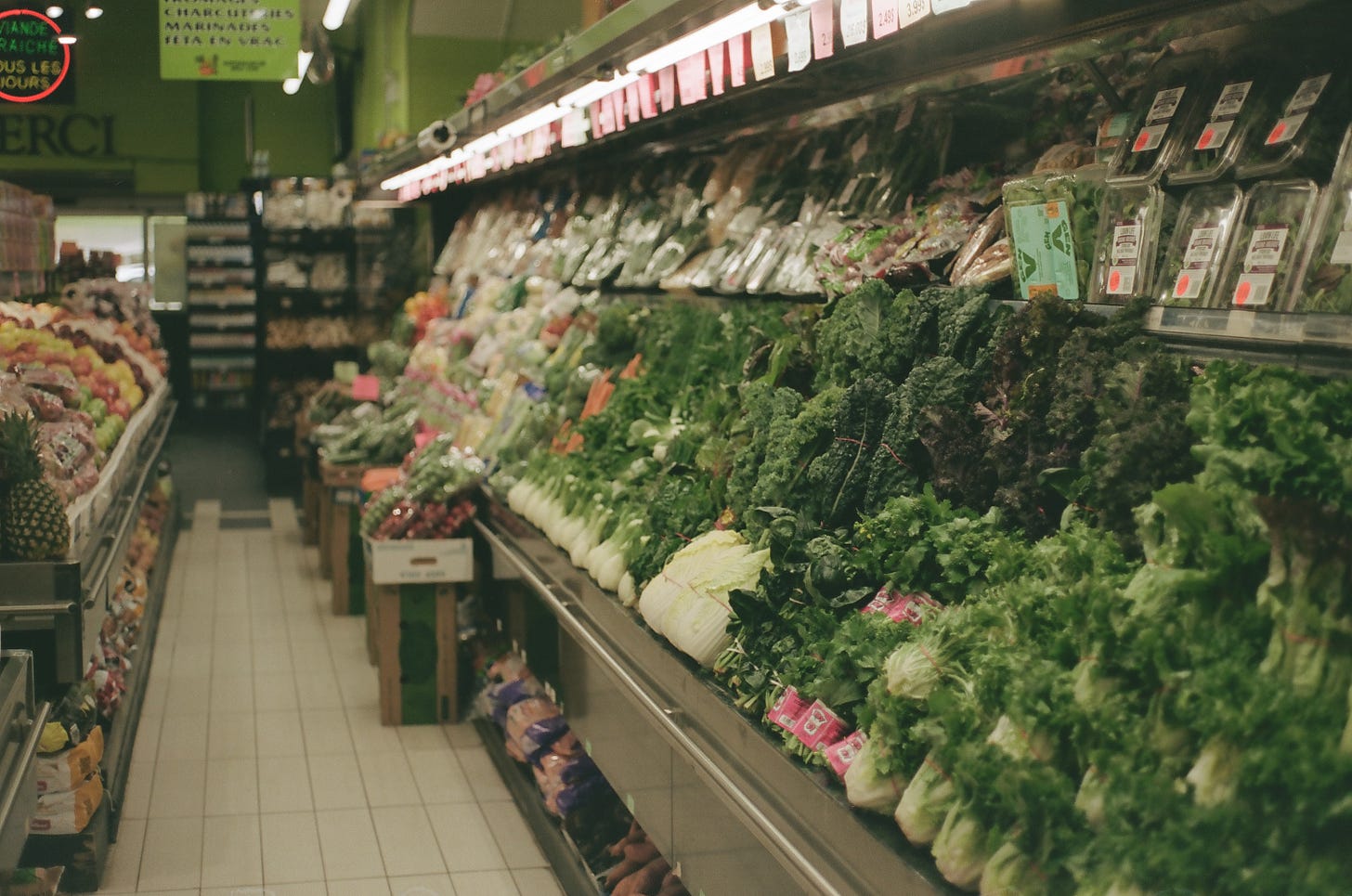
Colors abound—fruits and vegetables, canned goods, an array of flours and beans, spices, sauces… I could buy ingredients in this small store to cook just about anything. It’s remarkable to be a city-dweller with access to such a diverse and eclectic range of food products to buy on any given day.
Still, I yearn to be closer to the dirt. Everything lining these aisles was cultivated, grown, processed, and shipped from elsewhere. I pick up a zucchini — born and raised in the hills of California ~3,000 miles away, its verdant color more tantalizing thanks to fresh water droplets from the store’s watering system.
How many people worked to fill these aisles with the food that I am lucky to have access to? How many machines moved soil, weeds, and harvest? How many insects, earthworms, fungi, and microbes played a part? How many miles did each item travel to get here? How many lives did they touch along the way?
I trace the zucchini’s journey back to seed. Its story begins at a commercial vegetable farm in California, where a precision seed planter plunged it 1–2” into the dark belly of the earth — where moist, fertile soil offers what’s needed for life to emerge. Every seed holds the potential for flowering and fruit; it’s the right conditions that make it all possible.
in every acorn,
the wisdom of an old oak,
waiting patiently.
The nascent sprout traces its way through the soil toward the sun. Even in the dark, it knows exactly where to go. Bright green and eager, the sprout pokes through the topsoil to taste its first kiss of sun, a true delight.
Meanwhile, another journey continues. A lone root clings to the darkness, the beginnings of a foundation and refuge to meet the unpredictable and chaotic world above ground. Every breeze sends the sprout flailing — it is both surprised by the force of weather patterns and buzzing with vitality.
The soil is cared for, watered, weeded, tilled, and given the most precious gift of all: attention. Weeks pass. Our young sprout now has its sea legs; it’s held on through the cascade of a couple of spring thunderstorms. Others weren’t so lucky.
There’s a growth spurt. Suddenly, branches are crawling, reaching, and rising in squirrely ways, tracing the contours of the land. Swelling at the tips morphs into unfurling yellow-orange flowers. Life pools in the heart of each flower, awaiting birth’s great push and opening. Bees take note and visit each day to do their vital work.
Pollination.
Zucchinis thrust into the world out of the back of each flower, growing longer, fuller, and thicker by the day — form arising from a cocktail of sunlight, water, and minerals.
The harvest arrives. Our farmer knows when the time is right. Countless zucchinis are picked by hand on the same day, cleaned, and placed into large boxes for processing and distribution.
A refrigerated truck (called a “reefer”) picks up the bounty and heads down America’s wide, lonely roads and up across the Canadian border to a wholesale distribution center. From there, thousands of zucchinis are divvied up and sent sprawling across Quebec to supermarkets, restaurants, and farmers’ markets across the province.
From pluck to market, the process takes ~3–5 days.
My young zucchini ended up here at the Supermarché Mile-End — ripe, unassuming, and ready to be consumed. Holding it in my hands, I attempt to connect with the energy poured into this single vegetable’s life cycle. The word “sonder”1 echoes in my mind.
“Sonder” — noun. the realization that each random passerby is living a life as vivid and complex as your own — populated with their own ambitions, friends, routines, worries and inherited craziness — an epic story that continues invisibly around you like an anthill sprawling deep underground, with elaborate passageways to thousands of other lives that you’ll never know existed, in which you might appear only once, as an extra sipping coffee in the background, as a blur of traffic passing on the highway, as a lighted window at dusk.
Sonder was defined for people and human stories, but as I walk the aisles at the Supermarché Mile-End, I feel it in the lives of the fruits and vegetables; I long to taste the untold stories woven into the cells and sustenance of every meal I eat.
A Short Mindful Eating Practice
-
Close your eyes and take a moment to connect with gratitude for the food on your plate. A simple thank you — to your food, your home, the world, or life itself — is enough.
-
Open your eyes. Before eating, notice how it feels to be with your food and experience it with all your senses. Give attention to the smells, colors, textures, and shadows; notice any rumblings or sensations of hunger.
-
Bring awareness to any thoughts or feelings present, welcoming everything that’s here.
-
Take your first bite, chewing very slowly to experience the sensations of texture, flavor, and sustenance.
-
After you finish the bite, pause for a moment. Notice if anything has shifted since you began.
-
Continue slowly for the rest of your meal, chewing intently and savoring each bite.
- Sonder is one of many evocative words created and defined by John Koenig in The Dictionary of Obscure Sorrows.